What Is Ashwagandha — And Why Is Everyone Talking About It?
Ashwagandha (Withania somnifera) is one of the most important medicinal plants in Ayurvedic medicine — and has been for over 3,000 years. The name comes from Sanskrit and literally means "smell of the horse," referring both to the root's characteristic scent and the strength it's believed to impart: ashwagandha is said to give you the "vigor of a stallion."
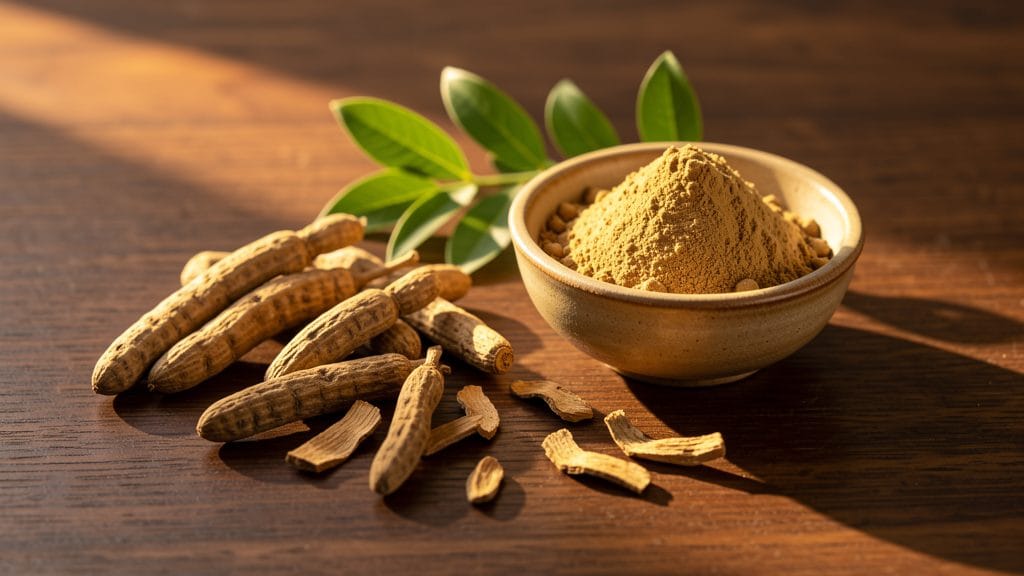
Botanically, the plant belongs to the nightshade family (Solanaceae), making it a relative of tomatoes and peppers. The root is the primary part used, with the leaves used less frequently. What makes ashwagandha truly special: it belongs to a class of substances called adaptogens — natural compounds that help the body adapt to physical and psychological stress and restore internal balance.
Over the past five years, scientific research on ashwagandha has gained considerable momentum. Between 2020 and 2025 alone, several high-quality randomized controlled trials and meta-analyses were published, convincingly confirming the stress-reducing effects of this remarkable herb — sometimes called "Indian winter cherry" or "sleep berry."
The Science Is Clear: Cortisol, Stress, and Anxiety Significantly Reduced
The most compelling study in recent years comes from Lopresti et al. (2019), published in the journal Medicine. In this randomized, placebo-controlled, double-blind trial, 60 stressed adults received 240 mg of a standardized ashwagandha extract daily for 60 days. The results: the stress hormone cortisol dropped by an average of 23%, while anxiety scores — measured using the established Hamilton Anxiety Scale (HAM-A) — fell by 41%. The placebo group showed no comparable improvements (Lopresti et al., Medicine, 2019).
These findings received even broader validation from a 2025 meta-analysis (Bachour et al., BJPsych Open) that pooled 15 randomized controlled trials with a total of 873 participants. The conclusion: ashwagandha significantly reduces cortisol, perceived stress (Perceived Stress Scale), and anxiety (HAM-A) with high statistical significance (p < 0.0001). The researchers concluded that ashwagandha represents a "promising natural option" for stress management (Bachour et al., BJPsych Open, 2025).
How Does Ashwagandha Work in the Body?
Ashwagandha directly targets the HPA axis (hypothalamic-pituitary-adrenal axis) — the body's central stress regulation system. Under chronic stress, this axis remains in constant overdrive, resulting in persistently elevated cortisol levels. The withanolides — ashwagandha's active compounds — dampen this overactivation and help the body return to a restful state more quickly. They also act as GABA receptor modulators, which explains the calming and anxiety-reducing effects.
An interesting additional benefit: several studies also show positive effects on the male sex hormone testosterone. Lopresti et al. found an average increase of 11% compared to placebo (p = 0.038), making ashwagandha particularly relevant for men experiencing stress-related low testosterone.
Practical Use: Dosage, KSM-66, and What to Watch For
Not all ashwagandha products are created equal. The gold standard among extracts is KSM-66® — a patented full-spectrum root extract standardized to contain at least 5% withanolides. KSM-66 was used in most of the clinical studies cited above and is considered to have excellent bioavailability.
The recommended daily dose typically ranges from 300–600 mg of a standardized extract, ideally split into two doses (morning and evening). Evening intake also supports sleep — hence the nickname "sleep berry." A popular evening ritual is Ayurvedic Moon Milk (see our recipe linked below).
Important Safety Notes
- Not for pregnant or breastfeeding women: Ashwagandha may trigger uterine contractions and is contraindicated during pregnancy.
- Thyroid patients: Ashwagandha can increase thyroid hormones — consult your doctor if you have Hashimoto's or other thyroid conditions.
- Drug interactions: Caution with sedatives, thyroid medications, or blood pressure medications.
- General tolerability: In clinical trials, ashwagandha was well tolerated — mild gastrointestinal discomfort is the most common but rare side effect.
For more information, see the official NIH Fact Sheet on Ashwagandha (NIH Office of Dietary Supplements).
💡 Product Tip: High-quality KSM-66 Ashwagandha is widely available. I recommend KSM-66 capsules from trusted brands — look for at least 5% withanolides and no unnecessary fillers. [Ad | Affiliate Link: Browse Ashwagandha KSM-66 on Amazon.com]
Conclusion: 3,000 Years of Ayurveda Meet Modern Science
Ashwagandha is that rare case where millennia-old traditional wisdom and modern clinical research mutually reinforce each other. The body of evidence has grown so robust in recent years that even skeptical conventional medicine practitioners are taking the herb seriously: significant cortisol reduction, measurable anxiety relief, and good tolerability.
For healthy adults dealing with everyday stress, inner restlessness, or trouble falling asleep, ashwagandha — in the right quality and dosage — is a natural option worth considering. Combining morning and evening intake of a standardized KSM-66 extract has proven particularly effective.
As always: ashwagandha is no substitute for a healthy lifestyle — but it's a valuable piece of the puzzle, one that research continues to validate with each passing year.
Disclaimer: This article is for informational purposes only and does not replace medical advice, diagnosis, or treatment. Please consult your doctor or healthcare provider for any health concerns. Ashwagandha should only be used after medical consultation during pregnancy, while breastfeeding, in cases of thyroid disorders, or when taking medications.