
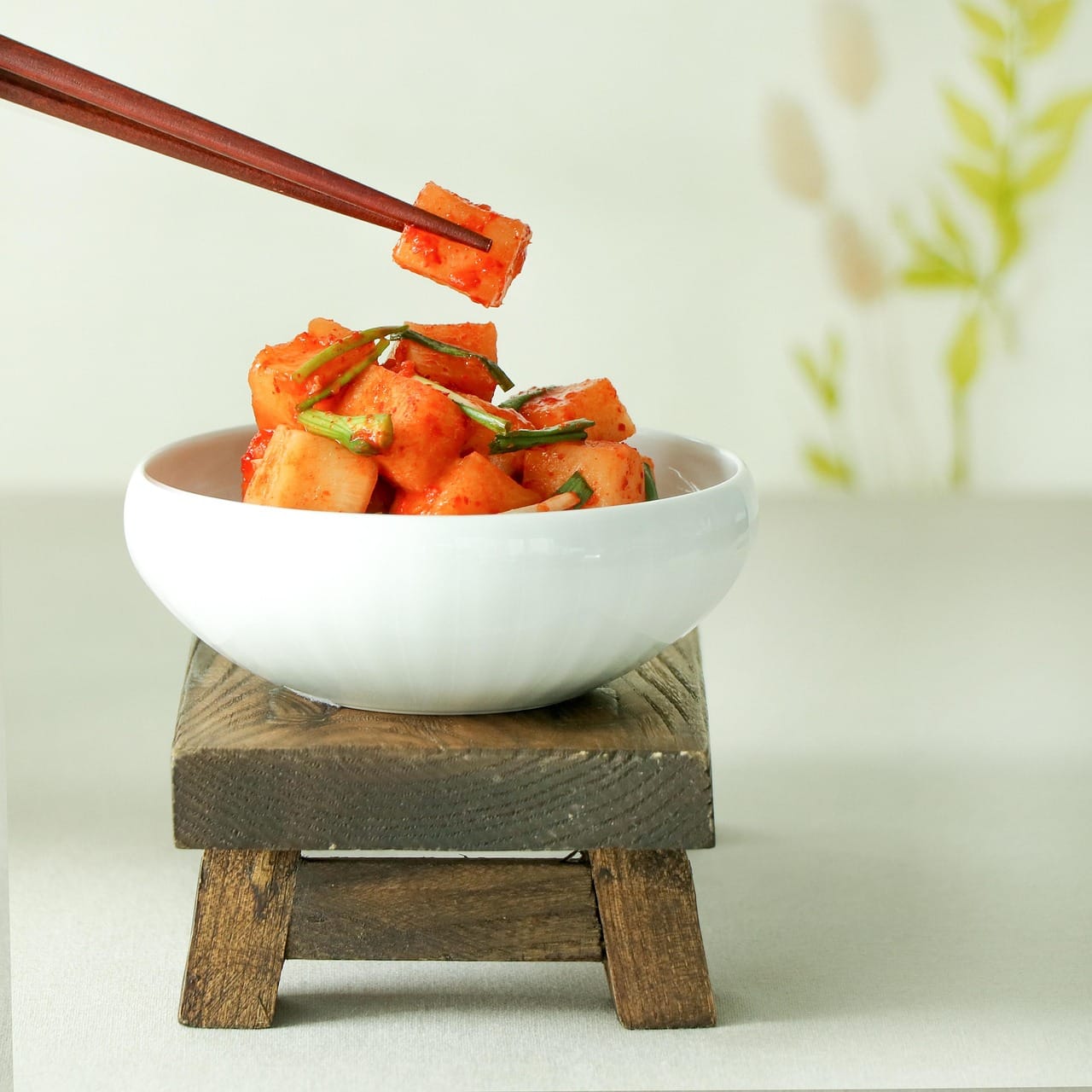
Why Homemade Kimchi?
Kimchi is Korea's national dish and one of the oldest fermented foods in the world – with the first written records dating back to the 7th century. What makes kimchi so special is that fermentation produces lactic acid bacteria (primarily Lactobacillus and Leuconostoc strains) that reach your gut alive and strengthen your microbiome. No industrial product can match the bacterial diversity of homemade kimchi.
Napa cabbage, radish, garlic, ginger, chili – fermented into a spicy, pungent, probiotic superfood that should be a staple in every healthy kitchen. Per serving (100g), kimchi provides approximately 15 calories, 2g of fiber, and large amounts of vitamins A, C, and K.
Ingredients (for 2 large 750 ml jars)
- 1 large Napa cabbage (approx. 1.5 kg)
- 4 tbsp coarse sea salt (non-iodized!)
- 1 medium radish (approx. 200 g)
- 4 spring onions
- 6 cloves garlic
- 1 thumb-sized piece of ginger
- 3 tbsp Gochugaru (Korean chili flakes) – [Advertisement] view on Amazon.de
- 2 tbsp fish sauce (optional, for vegan option replace with 1 tbsp soy sauce + 1 tsp miso paste)
- 1 tsp sugar (feeds the lactic acid bacteria)
Preparation
- Prepare the cabbage: Quarter the Napa cabbage lengthwise, remove the core, and cut into bite-sized pieces. In a large bowl, mix thoroughly with the sea salt and let sit for 2 hours. Turn every 30 minutes. The cabbage should be pliable and have released water by the end.
- Rinse: Rinse the salted cabbage thoroughly 3 times with cold water, then drain in a colander for 20 minutes. Taste a leaf – it should be slightly salty, but not unpleasantly so.
- Mix the paste: Process garlic, ginger, Gochugaru, fish sauce (or vegan alternative), and sugar in a blender or with an immersion blender to form a thick paste.
- Prepare the vegetables: Peel the radish and cut into fine strips (alternatively, grate coarsely). Cut spring onions into 3 cm long pieces.
- Combine everything: In a large bowl, mix the cabbage, radish, and spring onions with the chili paste. It's best to use disposable gloves – Gochugaru stains intensely!
- Jarring: Press the kimchi firmly into clean jars, ensuring no air pockets remain. Leave 3–4 cm of space from the lid (the kimchi will expand during fermentation). Place the lids loosely – do not screw them on tightly, as gases need to escape.
- Ferment: Let stand at room temperature (18–22 °C) for 24–48 hours. After 24 hours, taste: it should smell slightly sour and form bubbles. The longer it ferments, the more intense the flavor.
- Storage: Once the desired flavor is achieved, seal the jars tightly and refrigerate. It will continue to ripen slowly there and last for 4–6 weeks.
Serving suggestion: As a side dish to rice and grilled vegetables, in bowls, on avocado toast, or plain as a probiotic snack before a meal.
[Advertisement] No time to make it yourself? Fairment Culture Kimchi (vegan, organic, in a jar) offers live fermentation without the effort – view here on Amazon.de.
Note: Not a substitute for medical advice. In cases of histamine intolerance, fermented foods may cause discomfort.
📖 More on the topic: How fermented foods like kimchi, sauerkraut & co. strengthen your microbiome and reduce inflammation – the full article →