Few books have influenced medicine for as long as Avicenna's "The Canon of Medicine." For over six centuries, it was the most important medical textbook—first in the Islamic world, then the center of science, and centuries later at the nascent universities of Europe. But who was the man behind it, and why does his work continue to fascinate us today?
Who was Avicenna?
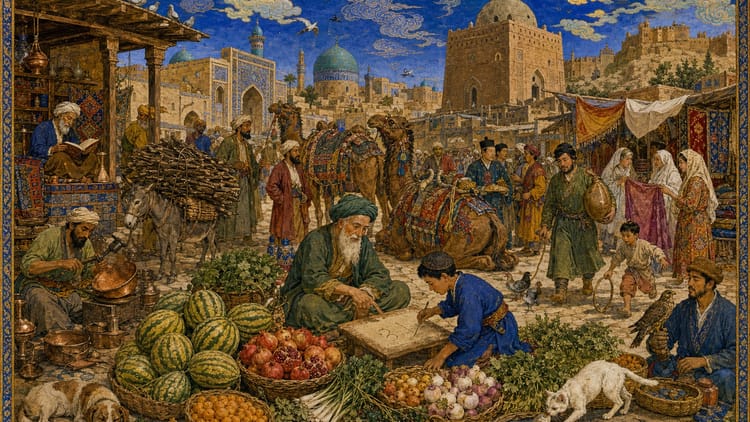
Avicenna—full name Abu Ali al-Husain ibn Sina—was born around 980 CE in Afshana, near Bukhara, in modern-day Uzbekistan. Even as a child, he was considered a prodigy: by age ten, he had memorized the Quran, and as a teenager, he mastered logic, natural sciences, and medicine. His breakthrough came when he cured the gravely ill ruler of Bukhara. In gratitude, he was granted access to the famous court library—a treasure trove of knowledge.
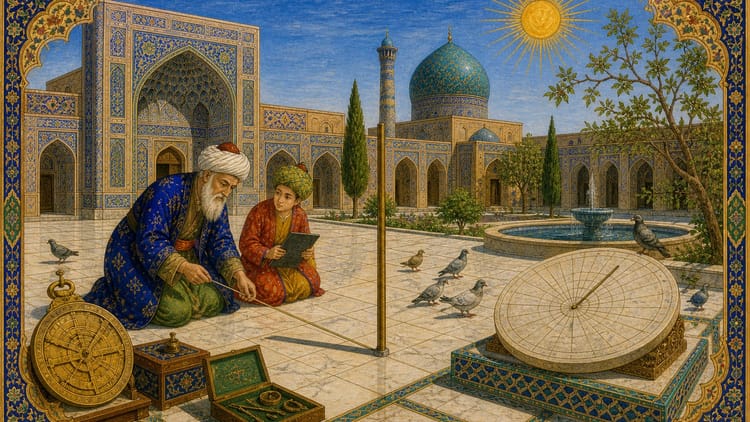
Throughout his life, Avicenna remained a restless scholar, traveling between princely courts and often writing at night. Approximately 240 works by him have survived—on medicine, philosophy, mathematics, and astronomy. Besides the Canon, his "Book of Healing" is considered a milestone in philosophy. He died in 1037 CE near Hamadan, in modern-day Iran. In the West, he became a legend under the Latinized name "Avicenna."
What is The Canon of Medicine?
“The Canon of Medicine”—Arabic al-Qanun fi at-Tibb—was written around 1025 CE. It is no ordinary textbook, but a complete encyclopedia of the medical knowledge of its time, roughly a million words long. Avicenna was familiar with the knowledge of antiquity and the Orient—but he didn't simply adopt it. He critically examined it, corrected errors made by Greek physicians, and, most importantly, added countless of his own observations, experiments, and discoveries. Thus, the Canon became not merely a collection, but an independent, newly conceived system of medicine—so clearly organized that physicians could look up information systematically.
The Five Books of the Canon
The work is divided into five books:
- Book 1 — Fundamentals: Anatomy, physiology, and pathology, along with the importance of lifestyle, nutrition, exercise, and sleep.
- Book 2 — Simple Remedies: Approximately 800 plant, animal, and mineral medicines with their effects, arranged alphabetically.
- Book 3 — Organ Diseases: Ailments of individual organs, systematically from head to toe.
- Book 4 — General Diseases: Fevers, poisonings, fractures, and surgical procedures.
- Book 5 — Compound Remedies: Complex formulations made from multiple active ingredients.
Far Ahead of His Time
Much in the Canon sounds astonishingly modern—and much of it comprised Avicenna's own discoveries. For example, he recognized that certain diseases could spread and be transmitted through the environment and water—and recommended isolating the sick. This is the basic principle of quarantine, long before microbes were known. He also described tuberculosis as contagious.
Remarkable, too, is his rigorous approach to the efficacy of medicines. He established rules for how a remedy should be tested: on humans, in multiple cases, comparatively, and with consideration for side effects—fundamental ideas that echo today's clinical trials.
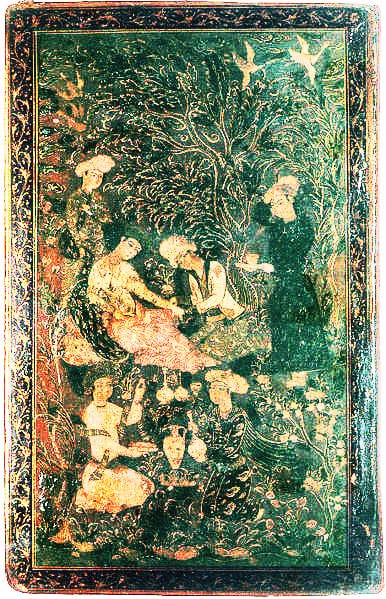
And Avicenna viewed the human being as a whole. A famous anecdote tells how he examined a young patient whose ailment no one could explain. While feeling the pulse, he had street and personal names recited—and when a specific name was mentioned, the pulse raced. His diagnosis: lovesickness, not a physical ailment. The story illustrates how early he understood the connection between body and soul.
A Treasure Trove of Medicinal Plants
Book Two alone describes hundreds of remedies—many of which we still know today, such as caraway, fennel, licorice, camphor, or black cumin. Avicenna noted not only what helps, but also in what form, dose, and combination. This meticulousness in handling natural remedies remains a model to this day—especially where traditional knowledge and modern research converge.
600 Years as a Textbook—from Asia to Europe
When Avicenna wrote the Canon, the Islamic world was at the peak of scientific achievement—at that time, there were no universities in Europe. It was not until the 12th century that Gerard of Cremona translated the work into Latin, just as the first European universities were emerging. There, the Canon became the standard work for centuries—at universities like Bologna, Montpellier, and Padua, until the 17th century. Europe thus learned its healing arts for a long time from the work of a scholar from the East. Few medical books in history have had such a lasting impact.
What We Can Learn From It Today
Avicenna's fundamental idea is more relevant than ever: health doesn't originate with the doctor, but in everyday life—through moderation, exercise, good nutrition, restful sleep, and inner balance. Prevention instead of just treatment, the human being as a whole instead of isolated symptoms. Precisely this idea is the core of what Avicenna stands for to this day—and the common thread behind the topics on this page.
This article is for informational purposes only and does not replace medical advice.