What is Ashwagandha – and why is all of Europe talking about it?
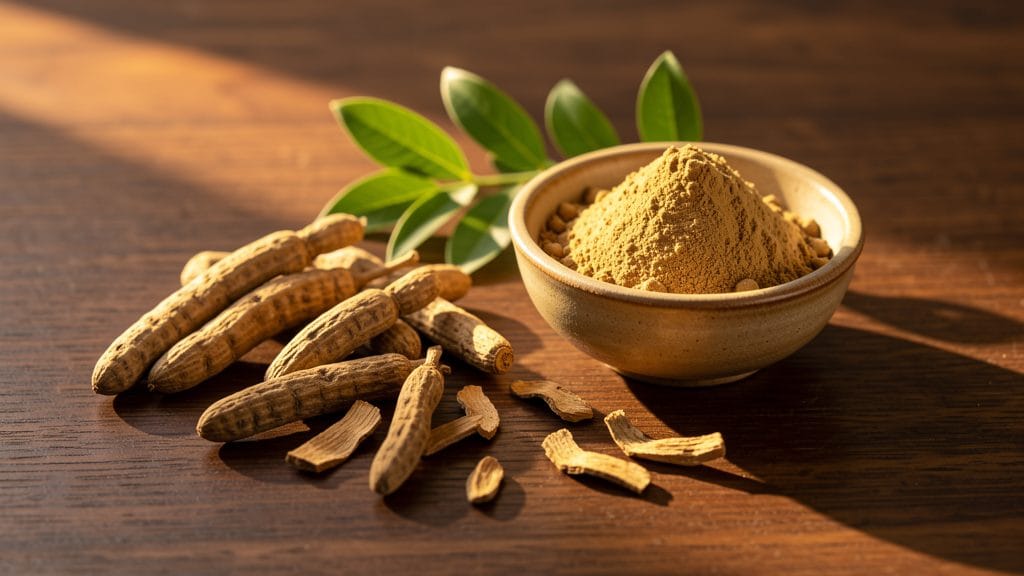
Ashwagandha (Withania somnifera) is one of the most important medicinal plants in Ayurvedic medicine – and has been for over 3,000 years. The name comes from Sanskrit and literally means "smell of a horse," which alludes to both the characteristic smell of the root and the strength attributed to it: Ashwagandha is said to bestow the "strength of a stallion."
Botanically, the plant belongs to the nightshade family (Solanaceae), making it related to tomatoes and peppers. The root is mainly used, less often the leaves. What makes Ashwagandha so special is that it is one of the so-called adaptogens – natural substances that help the body adapt to physical and psychological stress and restore inner balance.
In the last five years, scientific research on Ashwagandha has really gained momentum. Between 2020 and 2025 alone, several high-profile randomized controlled trials and meta-analyses were published, impressively confirming the stress-reducing effect of the "sleep berry" – as it is known in German.
Islamic Perspective: Medicinal Plants as a Gift from the Creator
In Islam, herbal medicine holds a high status. The Qur'an itself describes plants like olives, figs, dates, and pomegranates as signs of divine wisdom and mercy – it is not without reason that Paradise is described as a garden where healing fruits and herbs grow. The Prophet Muhammad (peace be upon him) recommended, among other things, black seed with the words: "In black seed there is healing for every disease except death" (Sahih al-Bukhari) (a religious tradition – not a medical promise of cure).
This openness to natural remedies is deeply rooted in the Islamic understanding of health – the body is a trust (amāna), for the care of which man is responsible before God. Ashwagandha, as an adaptogen, fits seamlessly into this tradition: a plant that supports the body in its natural stress regulation without synthetic additives. Of course, here too: Ashwagandha is not a substitute for medical treatment, but a complementary measure within the framework of a holistic healthy lifestyle.
The Science is Clear: Cortisol, Stress, and Anxiety Significantly Reduced
The most impressive study in recent years comes from Lopresti et al. (2019), published in the journal Medicine. In this randomized, placebo-controlled, double-blind study, 60 stressed adults received 240 mg of a standardized Ashwagandha extract daily for 60 days. The results: The stress hormone cortisol decreased by an average of 23%, while anxiety scores – measured with the established Hamilton Anxiety Scale (HAM-A) – decreased by 41%. The placebo group showed no comparable improvements (Lopresti et al., Medicine, 2019).
These results were further supported by a meta-analysis from 2025 (Bachour et al., BJPsych Open), which summarized 15 randomized controlled trials with a total of 873 participants. The conclusion: Ashwagandha significantly reduces cortisol, subjectively perceived stress (Perceived Stress Scale), and anxiety (HAM-A) with high statistical significance (p < 0.0001). The researchers conclude that Ashwagandha represents a "promising natural option" for stress management (Bachour et al., BJPsych Open, 2025).
How exactly does Ashwagandha work in the body?
Ashwagandha directly intervenes in the HPA axis (hypothalamic-pituitary-adrenal axis) – the central stress regulation system of our body. Under chronic stress, this axis remains constantly activated, leading to a persistently elevated cortisol level. The withanolides – the active compounds in Ashwagandha – dampen this overactivation and help the body return to a state of rest more quickly. Additionally, they act as GABA receptor modulators, which explains their calming and anxiolytic effects.
An interesting side effect: Several studies also show positive effects on the male sex hormone testosterone. Lopresti et al. found an average increase of 11% compared to placebo (p = 0.038), which was only observed in stressed, overweight, or older men. This also makes Ashwagandha interesting for men suffering from stress-related low testosterone levels.
Practical Application: Dosage, KSM-66, and What You Should Pay Attention To
Not every Ashwagandha product is the same. The gold standard among extracts is KSM-66® – a patented full-spectrum extract from the root, which works with a standardized content of at least 5% withanolides. KSM-66 has been used in most of the cited clinical studies and is considered particularly bioavailable.
The recommended daily dose is typically 300–600 mg of a standardized extract, ideally divided into two intake times (morning and evening). Evening intake also supports sleep – hence the nickname "sleep berry." A popular evening companion is Ayurvedic Ashwagandha moon milk (see our recipe).
Important Safety Information
- Not for pregnant and breastfeeding women: Ashwagandha can induce uterine contractions and is contraindicated during pregnancy.
- Thyroid patients: Ashwagandha can increase thyroid hormones – please consult a doctor for Hashimoto's and other thyroid diseases.
- Drug interactions: Caution when taking sedatives, thyroid medications, or blood pressure medications simultaneously.
- General tolerability: In clinical studies, Ashwagandha proved to be well tolerated – mild gastrointestinal discomfort is the most common, but rare, side effect.
Further information is available in the official Fact Sheet of the US National Institutes of Health (NIH) on Ashwagandha (NIH Office of Dietary Supplements).
💡 Tip: High-quality KSM-66 Ashwagandha can be found on Amazon.de. I recommend organic Ashwagandha KSM-66 capsules from brands like SUNDAY NATURAL, Natural Elements, or VitaBright – look for at least 5% withanolides and no unnecessary fillers. [Advertisement | Affiliate link: View Ashwagandha KSM-66 Organic Capsules on Amazon.de]
Conclusion: 3,000 Years of Ayurveda Meet Modern Science
Ashwagandha is a rare case where millennia-old traditional knowledge and modern clinical research confirm each other. The evidence base has become so robust in recent years that even skeptical conventional doctors pay respect to the "sleep berry": significant cortisol reduction, measurable anxiety reduction, good tolerability.
For healthy adults suffering from everyday stress, inner restlessness, or difficulty falling asleep, Ashwagandha – in the right quality and dosage – is a natural support worth considering. The combination of morning and evening intake of a standardized KSM-66 extract has proven particularly effective.
As always: Ashwagandha is not a substitute for a healthy lifestyle – but a valuable building block within it, which research increasingly supports each year.
Disclaimer: This article is for informational purposes only and does not replace medical advice, diagnosis, or treatment. For health complaints, please consult your doctor or naturopath. Especially during pregnancy, thyroid diseases, or when taking medication, Ashwagandha should only be used after consulting a doctor.
→ To the recipe: Ashwagandha Moon Milk – The Ayurvedic Nightcap